|
Thursday, May 02, 2013
Mammoths at the Zoo? Common Ground in the Grey Zone of De-Extinction
I know you felt it just like me; awash in the wonder of that first
encounter with the herd of long-extinct dinosaurs wandering the open
plain in Jurassic Park. The magic of seeing those animals, alive, in
the flesh, is exactly why scientists the world around are currently
chest-deep in discussions about the implications of the imminent
technologies that will very soon allow this to occur.
|

By Stacey Tarpley, PGAV Destinations.
They’re calling this ‘de-extinction.’ Although the species they are considering do not actually include dinosaurs, the conversation remains the same: Why de-extinction?
As I’ve sat considering the quandary myself, I quickly realized many of the issues brought up with de-extinction will likely affect zoos and aquariums and, in fact, directly parallel questions these institutions face already. The first being: Why zoos?
The answer is the same for both zoos and de-extinction, and often, the case for de-extinction could be made by examining the benefits of zoos and aquariums in general.
1. Education
Whether through formal group programs or free-choice learning (guests wandering the exhibits at their own speed, informally), zoos and aquariums offer some of the best opportunities to learn about biology, evolution, nature and conservation outside of a classroom environment. Seeing live animals first-hand captures the imagination of the learner increasing the likelihood to investigate further and, possibly more importantly, fosters empathy and motivates to take action to protect them.
2. Research
Zoos and aquariums have historically been centers of research. Early zoologists spent endless hours comparing the physiologies and behaviors of animals in captivity, and today zoos are working hard on tackling issues related to population management, genetics, and even psychology through working with live, captive animals. Additionally, unidentified technology and husbandry advances will no doubt result from de-extinction as it has from zoo and aquarium research.
3. Conservation
A lynchpin of modern zoos and aquariums, conservation is directly benefitted through increased public awareness of critical conservation issues and by actual in-situ (or, in-the-wild) programs instated by institutions. De-extinction has the added benefit of possibly encouraging remediation of ailing habitats in order to re-introduce animals to their natural homes.
4. Recreation
Zoo and aquarium guests, by and large, visit these institutions because it’s fun. It’s a chance to get away from the city, to escape and connect with nature—and with each other. Going to the zoo is cool, and watching a Saber-Toothed Tiger rip into dinner would also be pretty dang amazing. As one scientist admitted, we’d do it because we can.
Furthermore, these four tenets are widely recognized as the pillars of modern zoos and aquariums. Read any zoo’s mission and you’ll see some variant of these four elements. All are equally important to the success of the institution, often despite the public’s lack of awareness of the work. Interestingly, the final tenet—that of Recreation—is possibly the most controversial in both cases.
Society’s relationship to nature has evolved over the centuries from that of fear and later, dominance, to understanding and eventually into today’s ideal of stewardship. We now place a high value on conservation and increasingly embrace the ‘green culture’; however, this movement toward a full environmentalist ethic is in direct conflict with our ever-increasing Nature Deficit Disorder (our physical distancing from actual nature) and Culture of Connectivity and Instant Gratification, as illustrated by the rise and pervasiveness of digital and social media. Because of this paradoxical cultural phenomenon, modern zoos are faced with seemingly contradictory expectations from the public:
- Deliver a fun experience, up-close and immediate with animals
- Function as a sanctuary whereby the health and welfare of the animals (in captivity and in the wild) is job #1
In order to successfully deliver both, modern zoos and aquariums must meet the needs of three separate user groups (far more than most other institutions): the public, the animals, and the staff. Fail to provide for any one of these groups, and the institution is doomed. Ultimately, in order to meet the disparate expectations of the public, the zoo must undertake a careful balancing act, whereby the sweet spot lies in the intersection of Education and Entertainment. Too much Education and the guests are underwhelmed. The experience is no longer fun. It is work. It is school. Too much focus on Entertainment, and the experience is no longer wholesome and responsible. It is commonplace amusement.
Despite what critics say, zoos and aquariums provide an authentic nature connection. The animals themselves are nature. They are living, breathing, eating, mating, pooping. They are right there. Within sight, within earshot, sometimes within touch, usually within smell. They are not sanitized. They are dirty. They are real. And beyond the authentic experience, zoos and aquariums are truly working for conservation. They increase awareness of animals’ struggles. They support researchers and conservationists in the wild. They oftentimes lead conservation programs themselves, through rescue and rehab programs as well as leading on-site research into animal behavior.
The idea of whether or not we should be saving species from extinction is not today’s question. Whether or not we should be bringing them back for a second chance, however, is. Personally, I’m leaning toward ‘Yes, we should do this--but only for those animals extinct by direct human impact’ such as the Passenger Pigeon. Once we’ve succeeded in cloning these animals, and assuming we can overcome the issue of lack of genetic diversity for a sustainable population, we’re faced with the challenge of where to put them. The romantic answer is to ‘The Wild’, but upon examination, The Wild is simply a fallacy. In most cases, the habitats of these now extinct s pecies have been overtaken by human development or, as in the case of the soon-to-be-lost Red River Softshell Turtle, simply too polluted for habitation. One of two things can happen: we’ll get our acts together, create new habitats and restore polluted ecosystems; or, these de-extinct animals will make their ways to zoos and aquariums.
This is not so far-fetched. Zoos and aquariums have long been likened to Arks; saving species that no longer have much hope in The Wild. In some cases, the species only exists in captivity; and in others, captivity was the stepping stone to re-introduction of locally and universally extinct-in-the-wild species.
Taking on these animals will once again likely push zoos and aquariums directly into the spotlight, highlighting the ethical grey zones they and their critics are constantly debating. But one thing is certain: maintaining the only herd of Wooly Mammoth on Earth would get people through the door. And that’s the goal.
It’s what you do once they’re in there that holds the highest import.
|
Posted By
Stacey Tarpley
-- At
10:09 PM
|
Comments (0)
|
Trackbacks (0)
|
|
Add Comment
|
Categories
Zoos & Aquaria
Tags
|
|
|
(What are these?) |
Recommend to a Friend
|
Tuesday, April 23, 2013
What Do They Really Think?
Interesting question – what do our visitors really think, learn and do
during a visit to our facilities; and what do they remember after a
visit?
|
By Judy Mann
Around the world, zoos and aquariums invest heavily in their primary tasks – animal care, research, education and conservation. In fact, the role of a zoo or aquarium is to be a powerful centre for conservation through focussed research, practical conservation and effective education. However, the opportunity to do conservation work, through providing our visitors with a strong conservation message, is predicated by our ability to attract enough visitors to remain financially viable. But, even as we strive to find what we assume is a balance between our guests’ entertainment need and our need to alert them to the need for more sustainable living, we have very little actual data on which to base our assumptions.
Related: Directors of the World’s Zoos and Aquariums Meet in Melbourne/ Interview with Ted A. Beattie, CEO, Shedd Aquarium/ Aquariums: Durban's uShaka Sea World Launches the Ecohouse
This is where the new research field of Visitor Studies has emerged; generating real data on who our visitors are, what do they do when visiting us, what they learn during the visit, what they remember after the visit and, most importantly, what the impact of a visit to a zoo or aquarium is on their behaviour at home.
It was only in the early 1970’s that zoo and aquarium professionals started to question the educational value of a visit to a zoo. In fact, the comment that Sommer (1972) made - ‘We must learn the extent to which the zoo serves to develop a proper environmental ethic’ - is probably even more relevant today than it was in 1972. Although the last 20 years have seen a substantial increase in the type of research that investigates the zoo or aquarium visitor and the impact that a visit has on their short- and longer-term knowledge, behaviour and attitudes, the field is still in its infancy, with great potential for expansion.
The conservation imperative for zoos and aquariums is clearly explained in the World Zoo and Aquarium Conservation Strategy (WAZA 2005). Central to achieving many of the strategy’s conservation goals is the ability to reach our visitors’ hearts and minds, to influence their behaviour. It is only by understanding who our visitors are now, and what it is that they are currently getting out of a visit to our facilities, that we will be able to improve their experience sufficiently to ensure that our behaviour-change goals are achieved in the future. After all, with a combined visitorship of over 700 million people per year – zoos and aquariums are perfectly positioned to make a significant contribution to the global movement for a more sustainable future for our planet.
|
Posted By
Judy Mann
-- At
4:36 PM
|
Comments (0)
|
Trackbacks (0)
|
|
Add Comment
|
Categories
Attractions Business, Zoos & Aquaria
Tags
aquariums, waza, zoo
|
|
|
(What are these?) |
Recommend to a Friend
|
Tuesday, April 02, 2013
National Museum admission charges: time to think again?
With cuts of between 25-30% in state funding announced, Spain’s museums
are raising entry prices, sending works abroad, seeking private
donations and opening longer to offset.
|

By Keith Thomas, Petersham Group
Meanwhile, in the UK, the issue of free admission for all those visiting the national museums in London and in Liverpool hit the headlines again recently. At a time when regional arts funding in cities such as Newcastle is being decimated by 50% and at a time when a popular sports initiative such as the national free swimming programme has been cut completely to save £70 million, free admission to the national museums is costing the country over £350 million per annum.
Meanwhile, against the background of an obesity crisis amongst the young, 1 in 4 families cannot afford now to send their children to swimming lessons. The warm post-Olympic glow is fading and the question is being asked, where should the country’s priorities should lie? The question is reasonably being asked: is it a luxury to offer free entry to all at these particular museums in these times of austerity? Are the national museums doing enough to justify this special status?
Related: Attractions and the Experience Economy / Attraction Recession Action Plan
Although visitor numbers, unsurprisingly, are robust, fewer lower income families are visiting museums. It is the better off and the overseas tourist who are taking advantage of this ‘special offer’.
If part of the raison d’être of our wonderful museums is to offer the citizens of the UK the greatest possible opportunity to gain insight and experience of their own culture and heritage, should the subsidy be spread more widely rather than confined to a handful of locations as is currently the case?
Maybe before the roof falls in, the Museums themselves might take the initiative and consider reintroducing admission charging to overseas visitors in order to lessen the strain, bearing in mind that they make up half of those visiting the national museums. Is that really so unreasonable?
Perhaps a starting point would be to grasp the nettle and ask our tourists whether they expected their visits to these wonderful institutions to be offered to them gratis or whether it is an unexpected, if welcome bonus?
|
Posted By
Keith Thomas
-- At
2:17 PM
|
Comments (0)
|
Trackbacks (0)
|
|
Add Comment
|
Categories
Museums, Unclassified
Tags
museum, tate
|
|
|
(What are these?) |
Recommend to a Friend
|
Tuesday, January 15, 2013
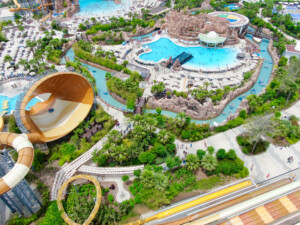
Waterparks: Turkish Delight at Polin’s Annual Dealer Conference, Antalya, Turkey
The annual Polin Dealership Conference was held at the end of
November 2012 in Antalya, Turkey. A two day event, which Blooloop was
fortunate enough to attend, the conference brought together 180
attendees of 32 nationalities for a program of presentations and site
visits in southern Turkey.
|

Turkey is a fascinating and vibrant market in these times of gloomy g lobal recession, with a fast growing, stable economy, a high proportion of the labour force being young and well educated and a thriving tourist industry. [See “Sohret Pakis, Polin, Discusses the Future of the Attractions Industry in Turkey”]
Polin has enjoyed considerable success in recent years, notably with their game-changing themed King Cobra waterslide.
The Turkish waterpark and waterslide manufacturer has a new 30,000 sq meter manufacturing facility under construction which is due to come online in 2014.
A day of presentations included the following:
- Baris Pakis (Polin) welcomed delegates
- Basar Pakis (Polin) spoke about Polin’s vision
- Kubilay Alpdogan (Polin) highlighted key industry trends
- Sohret Pakis (Polin)set out Polin’s very successful marketing strategy
- Fred Bouvard (Splashworld) discussed best practice for waterpark investment – “no financial people are gentle sharks!”
- Roger Currie (Aqua Leisure International) spoke about k
ey issues of waterpark development
- Bruce McFarland (American Wave Machines) talked about AWM’s surf systems
- Manfried Meier (Kraftwerk Living Technologies) introduced waterpark cinema, Waterplexx 5D
Perhaps most interesting was the insight into key trends from Polin’s point of view:
- Signature slides, most notably the King Cobra, of which there will be 20 installed by the end of 2013, three of which will have alternative themes (see below).
- Theming:
- Glassy/translucent slides are popular, eg the Tai Po Aquatic Center (right) and Carnival cruise liners.
- Effects and technology integration, eg multimedia projections planned for Cartoon Network AMAZONE
- High capacity family raft rides
- Interactivity, eg splash battle and multilevel play structures
- Lower carbon emmission manufacturing
At the end of the conference program various awards were presented to Polin’s dealers and partners.
Most touching was the award presented to Enver Pakis (below), founder of Polin, by his three sons.
Despite international success Polin is at its core a family business and the conference had the feeling of a huge extended family reunion with a warm welcome to new members.

An elegant gala dinner in the evening featured live entertainment, including traditional drumming from the Polin team, and very energetic dancing which went on well into the night.

The next day delegates were able to visit Antalya Aquarium as well as two resort waterparks: Cobra Kingdom Waterpark at the Maxx Royal Hotel (below) and the Gural Premier Tekirova Waterpark Resort (above). The first glimpse of a gorgeous King Cobra close up did not disappoint.
So with a thriving economy and a booming attractions market, Turkey is one to watch. Polin’s warm hospitality made for a fascinating and memorable trip … and they can really dance too!

|
Posted By
Blooloop
-- At
6:43 PM
|
Comments (1)
|
Trackbacks (0)
|
|
Add Comment
|
Categories
Attractions Business, Themed Design, Waterparks, Zoos & Aquaria
Tags
Cartoon Network AMAZONE, Great Mall of China, King Cobra, polin, waterpark, waterslide
|
|
|
(What are these?) |
Recommend to a Friend
|
Friday, January 11, 2013
‘Englishnization’/ ‘disgalapagosisation’: globalisation the Rakuten way
Employees to learn English in 3 months and clean their own desks; globalisation strategy from the Japanese internet shopping giant Rakuten.
|
Rakuten, the Japanese B2B2C internet marketplace, aims to realise ambitions to be “the number one internet services company in the world" with an interesting globalisation strategy. As well as a series of bold ‘internet shopping’ acquisitions, the company has instigated compulsory ‘Englishnization’ a nd a DIY clean desk policy to prepare for taking on Amazon.
‘Englishnization’
Rakuten chairman, CEO and founder Hiroshi Mikitani requires all employees to be fluent in English and gave them just three months to get up to scratch! All meetings and internal communications are now to be conducted entirely in English to ensure that the internet giant can operate as a truly global group.
The plan is known as ‘Englishnization’ or ‘disgalapagosisation’ [dis-Galapogos-isation] which reflects Mikitani’s view that Japan needs to be less isolationist and communicate better with the rest of the world to compete globally. Rakuten laid on language lessons for staff, but those unable to get to a suitable level of proficiency risked losing their jobs.
Here’s a link to an interview with the BBC about 'Englishnization'.
Internet Shopping and a Clean Desk
Rakuten is still relatively unknown outside of Japan, deliberately keeping a low profile until ready to take on competitors in the global market in 2012. The company, founded 15 years ago with just 13 clients, now has annual revenues of $4 billion.
For those interested in learning more there is an excellent interview with Mikitani on Wired which looks at his background and plan for world domination. Some key elements below:
Another initiative from Mikitani is to do without office cleaners; all employees are responsible for cleaning their own work spaces on Monday mornings to "to bring us back to basics".
In addition to insisting that all staff become fluent in English and clean their own desks, Mikitani instigated a series of acquisitions of internet retailers which has catapulted Rakuten into 27 countries:
America's Buy.com - $250 million
- France's PriceMinister - €200 million
- UK’s Play.com - £25 million
- Canada's Kobo - $315 million
- Germany's Tradoria
- Brazil's Ikeda
... as well as a series of other investments:
- $100 million investment in Pinterest
- $10 million funding round in AhaLife
- A minority investment in Russia's leading etailer, OZON
|
Posted By
Rachel Read
-- At
11:36 PM
|
Comments (0)
|
Trackbacks (0)
|
|
Add Comment
|
Categories
Amusement Parks, Attractions Business
Tags
Hiroshi Mikitani, Internet Shopping, Rakuten
|
|
|
(What are these?) |
Recommend to a Friend
|
Friday, December 14, 2012
Directors of the World’s Zoos and Aquariums Meet in Melbourne
What do Ural Owls, Ozark Hellbenders and pygmy possums have in common?
They are all species of animals which members of the World Association
of Zoos and Aquariums are trying to save from extinction.
|
In October, over 200 of the world’s zoo and aquarium directors gathered for the 67th Conference and Annual General Meeting of the World Association of Zoos and Aquariums (WAZA).
By Judy Mann
The conference was held in Melbourne, Australia and was ably hosted by Zoos Victoria. Zoos Victoria includes the Healesville Sanctuary, the Werribee Open Range Zoo and the Melbourne Zoo, which celebrated its 150th anniversary during the conference.
With the theme ‘Fighting Extinction’, the conference provided delegates with an insight into the conservation work being undertaken in zoos and aquariums throughout the world.
Related: Cape Town’s International Aquarium Congress: Sharing Ideas, Challenges and Solutions / Interview With Deborah Cannon, President and CEO of Houston Zoo / Two Oceans Aquarium hosts the 2012 International Aquarium Congress
So often zoos and aquariums are criticised for being financially driven and focussed more on animals than on conservation. However, the range and depth of the zoo based conservation projects presented made it clear that zoos and aquariums are about much more than making money. In fact, research has shown that over US$ 350 million is donated by the world’s zoos and aquariums to field conservation projects each year. This is in addition to the opportunity to reach over 700 million visitors per year, with conservation messages that encourage positive environmental behaviours.
The conference showed that the world’s zoos and aquariums are serious about animal care and welfare, serious about conservation – both through captive breeding programmes and field based conservation and serious about their role in communicating the need for better care of our planet to their millions of visitors. While juggling these varied roles is sometime difficult, the commitment of the directors to conservation was obvious.
To protect the wild places and wild animals of the world we need people to care for them, and around the world, good zoos and aquariums are inspiring people to care through magical experiences. Through the discussions it became clear that WAZA and its members are important and active players in the international conservation field.
In case you were wondering – a Hellbender (see above right) is a type of salamander!!!
Image of Hellbender, thanks to Jeff Humphries
|
Posted By
Judy Mann
-- At
1:14 PM
|
Comments (3)
|
Trackbacks (0)
|
|
Add Comment
|
Categories
Expos
Tags
aquarium, judy mann, ushaka, zoo
|
|
|
(What are these?) |
Recommend to a Friend
|
Tuesday, November 27, 2012
IAAPA's 12th Annual Charity Golf Day: Helping Give Kids The World.
The 12th annual International Association of Amusement Parks and
Attractions (IAAPA) Give kids The World Charity (GKTW) Golf day took
place Sunday November 9th at Hawks Landing Golf Club in Orlando.
|

It was the first of a number GKTW fundraising events to take place during the IAAPA Attractions Expo 2012, including the 6th Annual IAAPA 5K/1K Fun Run and Walk, Footprints from the Heart and the 3rd Annual IAAPA Motorcycle Ride. The activities raised over $80,000 for the central Florida based charity.
And so to Hawks landing Golf Club at Orlando’s Marriott hotel, where at 7am on the 9th November, a rag-tag collection of 143 attractions industry people assembled. A smattering of the golfers play regularly (identifiable by the checked trousers, Tam o' Shanters and wildly camp shirts) and the remainder at best dabble, for many this being their only such outing of the year.
I set off on the morning’s play in our little Banana Splits style buggy with my standard misguided optimism, which reason and experience told me would soon be quickly deflated, my game unravelling as I directed shot after miserable shot into the picturesque ponds , lakes and shrubberies surrounding the course.
Each hole was sponsored. At one we were greeted by team Picsolve, the image/photo company, who proceeded to ply us with cigars and margaritas, “forcing” drink after drink on us. This diversion was probably connected to the subsequent deterioration of our game.
The team immediately ahead of us comprised Amazing Picture’s Mark Simmons and Henry Tyson (my teammates from a previous year, see: Well Above Par: at IAAPA's Charity Golf Event), Universal’s Kathy Griffiths and a childhood friend of Mark’s, who like his three teammates was depressingly good. Others teeing up included PGAV Destination’s Al Cross, Kurt Mack-Even (Mack Rides) and Markus Mack-Even (IMG Theme Park Attractions), Steve Drake, Tara Morandi and Tom Burnet of virtual queuing company Lo-Q, Barry Gertz and Michael Turner of water filtration and circulation company Neptune Benson, Miika Seppala of Särkänniemi Adventure Park, Franceen Gonzales of Great Wolf Resorts, Edward Pawley of Adventure World Warsaw, Terry Monkton of 3D/4D attraction company Simworx and John Davies of ticketing and access company Omniticket.
Sponsors of the event included Neptune Benson, Vekoma Rides Manufacturing, Herschend Family Entertaunment, theme park and attractions designer Jack Rouse Associates, Triotech and waterpark specialist Whitewater west. The afternoon’s hangovers were sponsored by Picsolve.
The tournament was won by the foursome of Six Flags’ Walt Bowser, John Andrews of Baynum Painting, and Bill Wright and Chas Kuhn, both of Ride Entertainment. The longest men’s drive was won by Jordan Hurley, of Formula One Driver, and the women’s by Picsolve’s Jessica McNaulo.
“I’m so pleased we continue to be a great international tournament—we have players from many, many countries, who enjoy this day as the opening of IAAPA Attractions Expo,” said Bill Alter, co-chairman of the event. “Nothing could be greater than making a sizable contribution to Give Kids The World while having this much fun.”
Bill was spot on. A relaxed, cocktail fuelled morning stroll round a golf course with good friends and colleagues. The ideal curtain raiser.
|
Posted By
Blooloop
-- At
11:58 PM
|
Comments (0)
|
Trackbacks (0)
|
|
Add Comment
|
Categories
Amusement Parks, Attractions Business, Expos
Tags
colorvision, GKTW, golf, IAAPA, pgav, picsolve
|
|
|
(What are these?) |
Recommend to a Friend
|
Thursday, November 15, 2012
In Remembrance of Disney’s Dave Herbst
There’s a common misconception about Giants. To be a Giant, you don’t
have to be big or tall or otherwise physically imposing. You just have
to be strong. That’s why Dave Herbst was a Giant—because he was strong
in so many ways.
|
By Chad Emerson
Recently, the amusement industry lost a Giant when Dave unexpectedly passed away. Though he had recently retired from his long-time career as a Disney publicist, Dave leaves behind a lasting impact throughout the industry and beyond. His impact is inextricably tied to his strength. As a family man, as a friend, and as one of the best publicists the industry has ever known, Dave was a Giant.
Related: Long-time Disney PR guru Dave Herbst reflects on brilliant rainbows & dark clouds
Hired in 1981 by another Disney legend, Charlie Ridgway, Dave was a strong family man. Rarely would a conversation not include stories about beloved wife Kathy, daughters Kristin and Stephanie, and his grandchildren. Their happiness motivated him. Dave deeply loved his family.
Dave was also a strong friend. I first met Dave in 2003 through a strange email miscommunication (another story for another day). While our friendship started unconventionally, it grew into one of my most cherished relationships. As I covered Disney for Blooloop, Tourist Attractions & Parks Magazine, and several other publications, I always looked forward to visiting with Dave. He was a strong friend because he looked out for you. And he provided sound advice whenever asked (and sometimes even when not!).
I’ll never forget one press event that ended with Dave and me walking down a near empty Main Street U.S.A. just discussing life. Dave was the friend that you looked forward to seeing every time you had the opportunity.
And, of course, Dave was a strong publicist. He was a Giant among even his most prolific peers. This is probably because he never forgot his reporter roots. Over the years, Dave had many opportunities to climb the corporate ladder. He was, after all, as talented as anyone many rungs up. Though he did test those waters on occasion, Dave ultimately settled into the role he loved: a reporter who happened to work as a publicist for Disney.
Regardless of how many times Disney changed his title (which wasn’t infrequent) Dave remained the same. He was a mentor to colleagues, a loyal employee to his employer, and an amazing resource for the media. This is not to say that Dave was without his own opinions and ideas. Indeed, it was Dave’s strong opinions that made him such a Giant.
In Dave’s mind, if Michael Eisner or Bob Iger or Tom Staggs (or any other Disney leader) would just embrace his ideas, The Walt Disney Company would reach previously unknown heights of success. Even so, he was never disloyal or dishonest. What you heard is what you got with Dave.
Dave defined authenticity. His strength was real and genuine. It was so refreshing in the modern world of often disguised motives. I find it hard to imagine that there will ever be a better amusement industry publicist than Dave Herbst.
Ultimately, Dave was a Giant because Dave was strong. Dave loved his life and we are better because of it. Though we mourn his leaving, we still celebrate his strength and his love for others.
Padiddle, Dave. Padiddle.
|
Posted By
Chad Emerson
-- At
5:37 PM
|
Comments (4)
|
Trackbacks (0)
|
|
Add Comment
|
Categories
Amusement Parks, Themed Design
Tags
chad emerson, Dave Herbst, Disney
|
|
|
(What are these?) |
Recommend to a Friend
|
Saturday, November 03, 2012
Attractions and the Experience Economy
Increasingly we’re finding that countries, regions and cities worldwide
are realizing the true value of the Experience Economy, that blend of
Leisure and Entertainment, History and Culture, Shopping and Dining Out
that as an example was most recently valued in the UK at over £115
billion or 8.9% of GDP.
|
Of this, spending by inbound tourist visitors to UK is forecast to rise at 4.4% compared to 2.6% by domestic residents in the period to 2020 (Deloittes).
by Keith Thomas, Director, Petersham Group.
This begs the question: Why do visitors choose a particular destination? Simple, because they like what they see and hear! It’s all about reputation. They have formed their own opinion based on the huge amount of media available to them, ranging from Tripadviser to travel channels; Sunday supplements to good old word of mouth and increasingly from social media. They do it at home or in their hotels and they do it on the move from smartphones and tablets. We need to make it easy for visitors to make their decision in advance and not leave it up to the vagaries of weather and other factors to influence them on the day.
Related: Attraction Recession Action Plan / Battersea Power Station: Preserving an Eyesore?
Today, we create our own itineraries based on what we want to experience, not based on tradition, the resort brochure or its modern day equivalent, the destination’s web site! We want great experiences and we want them on our own terms and in the majority of cases, in t he company of people like us in outlook and tastes.
Ultimately, popularity is contagious. People are aspirational in their outlook; they want to spend their leisure time at popular locations, whether they be Oxford Street, Alton Towers or Fisherman’s Wharf. In the Experience Economy, shopping, eating out or visiting attractions are all equally valid leisure activities and successful destinations are those that combine all of these things in an accessible and easy to visit package.
Visitor Attractions have a central role to play in this: innovative and well designed attractions act as anchor features for successful destinations. They can draw additional tourists to a destination. They are a catalyst and focus for wider development. By giving visitors a reason to spend more time in a destination, they help to support other complem entary leisure projects, museums, shops, hotels; even commercial and residential development.
An attraction may be an iconic development that can effect a paradigm shift in perception of a location, like the Guggenheim, Bilbao; it may be a signature restaurant in a previously unknown Cornish fishing village or it may be a cluster of historic and cultural attractions that together create a destination that becomes a must-see stopover on every tourist coach trip. The bottom line is that it’s the attractions in the widest sense that are offering the visitor the great and memorable experiences that they crave in their increasingly busy and stressed lives and it’s this industry’s job to deliver them!
|
Posted By
Keith Thomas
-- At
10:52 AM
|
Comments (1)
|
Trackbacks (0)
|
|
Add Comment
|
Categories
Amusement Parks, Attractions Business, Unclassified
Tags
economy, keith thomas, petersha, plymouth
|
|
|
(What are these?) |
Recommend to a Friend
|
Friday, October 05, 2012
Battersea Power Station: Preserving an Eyesore?
Battersea Power Station is in the news again, now that its owners have
announced that they will begin an £8 billion revamp in 2013. The
Malaysian consortium, which bought the site for £400 million, plans to
build homes, offices, shops and a park.
|
No big surprises there; someone had to start redevelopment sometime, but the bit that caught my attention was that the chimneys will be knocked down and replaced with replicas.
Related: What's the Big Idea? Looking at the Legacy of the Millennium Commission/ What is more important, recruitment or training?

By Martin Barratt
When John Broome had the site, intending to build a theme park, he demolished the roof and the west wall, before he realised that the building had virtually no foundations, and the economic downturn forced him to sell up. Since then numerous other developers have tried to put a scheme together, but the constraints applied by English Heritage have made every one fail from a financial perspective.
When it was built in 1933 Londoners said that it was an eyesore that spewed pollution. Phase 2 was opened in 1952, but then the plant was decommissioned in 1983, only 50 years after phase 1 was completed.
It has appeared in films and as the backdrop for some giant inflatable pigs, but does that justify its protection? It was ugly when it was built and it is ugly now. When the redevelopment is complete less than half of it will be original and we can safely assume that the development will cost its new owners far more than if it was an empty site, increasing the risk that the project will fail. So what exactly are English Heritage trying to protect?
Why are we preserving an ugly, poorly built hulk when we could knock it down and allow the building of a well designed development, built for purpose?
|
Posted By
Martin Barratt
-- At
10:13 PM
|
Comments (1)
|
Trackbacks (0)
|
|
Add Comment
|
Categories
Amusement Parks, Attractions Business
Tags
Battersea Power Station, English Heritage
|
|
|
(What are these?) |
Recommend to a Friend
|
Wednesday, September 26, 2012
Cape Town’s International Aquarium Congress: Sharing Ideas, Challenges and Solutions
From ideas for improved visitor interpretation, to thoughts on how to
generate more revenue, suggestions on sustainability in aquariums to
challenges facing collections – the 8th International Aquarium Congress
covered a wide range of topics pertinent to aquariums throughout the
world.
|
By Judy Mann
Ably hosted by the Two Oceans Aquarium and attended by over 300 aquarium professionals from around the world, the Congress was a resounding success.
Related: Two Oceans Aquarium hosts the 2012 International Aquarium Congress / Durban's uShaka Sea World Launches the Ecohouse / Two Oceans Aquarium's Dr. Pat Garratt on the International Aquarium Congress (IAC) 2012
The opening celebrations, with the theme “Deep down we are one’, set the tone for the rest of the conference. What was most striking was the fellowship amongst the delegates. As this was the first IAC hosted in Africa it was interesting to note the range of countries represented – amongst other countries were China and Japan, Australia, Eastern and Western Europe, United Kingdom and the USA, as well as a good number of South African delegates. This spread made the conference far more convivial than previous conferences, as there was no single country with a dominance of delegates.
The introduction of a new form of conversational session during the conference encouraged communication between delegates, who were sitting in small groups, rather than in traditional conference style seating. This helped to break the ice and ensure that people from different aquariums and countries met each other. Probably the most striking aspect of the congress for me was the open sharing which took place. The discussions were lively and sometimes heated, but always held in an inclusive manner that encouraged participation.
A few interesting issues emerged - aquariums are a thriving business, new aquariums are opening each year, old aquariums are being bought out by commercial enterprises and are being renovated and this trend appears to show no sign of slowing down. Aquariums are, however, starting to think more carefully about their exhibits and are definitely looking at better exhibits rather than bigger exhibits.
Sustainability, the theme of the conference, is another emerging trend in aquariums, although given the inherent environmental footprint of an aquarium, we still have a long way to go before aquariums can be considered to be carbon neutral. Aquarium professionals are thinking about their collection sustainability now more than ever in the past – we all know that ‘free from the sea’ is an outdated concept and we will need to look increasingly at improved animal care, captive breeding and more sustainable collection methods.
Helping visitors to care for our oceans emerged as the primary reason for the existence of many aquariums and this issue was highlighted throughout the congress. How to improve our ability to inspire care for the oceans, and the environment in general requires a great deal more attention, as this aspect of our work is as important as our ability to care for our animals.
Having attended two previous International Aquarium Congresses, this one impressed me with the depth of issues tackled. The aquarium industry is grappling with water quality issues and animal husbandry challenges, exhibit designs and problems with legislation; however, it is also looking at sustainability and relevance, better internal governance and improved education and visitor inspiration.
The bottom line will always remain critical – but the aquarium industry is looking beyond money and is tacking the challenges facing our planet with enthusiasm and commitment. Deep down we are all one – and – based on the delegates to the IAC - the aquarium industry is united to face the future.
|
Posted By
Judy Mann
-- At
11:21 AM
|
Comments (2)
|
Trackbacks (0)
|
|
Add Comment
|
Categories
Zoos & Aquaria
Tags
|
|
|
(What are these?) |
Recommend to a Friend
|
Friday, September 21, 2012
Fur farm Marketing deal with Tivoli provokes Social Media Backlash
Danish amusement park Tivoli has entered an agreement for a new
sponsorship with Kopenhagen Fur, the world's largest fur auction house.
Kopenhagen Fur will be the official partner for Christmas in Tivoli the
next 3 years.
|

During the festive Christmas event will dress some members of staff in their furry products and will re-decorate rooms at Tivoli's Nimb hotel with cushions, throws and blankets made of fur. Fur products will also be on sale in Tivoli.
By Mikkel Sonne
Related: Chic, Contemporary Christmas - The Champs-Élysées' Christmas illuminations / The Wax Museum After Dark / Themed Design: The Attraction of Scent
The sponsorship has caused a stir in local media. According to Thorbjørn Sciønning from Anima, a local animal rights organisation, some Danish fur producers were revealed neglecting basic animal welfare laws in a 2009 TV documentary. Member of the board and chairman of Kopenhagen Fur for 17 years Erik Hansen was found guilty of animal abuse in 2011.
Anima states that while Denmark is the world's largest producer of fur with some 14-15 million minks being produced every year, a 2009 survey revealed that the majority of Danes think the production should be banned, as it already is in England, Austria and other countries.
The announcement of the sponsorship deal has evoked strong feelings among users on Tivoli's Facebook site. Many people threat to boycott the park. One user writes "I am shocked to learn about Tivoli's deal with Kopenhagen Fur. I personally feel it is a shame to put money above animal rights. I will never visit Tivoli again." Other users post pictures of bleeding animals from Kopenhagen Fur's farms, asking if this is what they should expect to experience this Christmas in Tivoli.
Mink image: via qmnonic via Flickr Creative Commons
|
Posted By
Mikkel Sonne
-- At
2:55 PM
|
Comments (0)
|
Trackbacks (0)
|
|
Add Comment
|
Categories
Amusement Parks, Attractions Business
Tags
animalrights, denmark, fur, mink, tivoli
|
|
|
(What are these?) |
Recommend to a Friend
|
Tuesday, August 28, 2012
Euro Attractions Show 2012: Unique Tours, Notable Firsts at Berlin's EAS
Just coming back from meetings in Berlin, and only 7 weeks prior to the
Euro Attractions Show, we are now coming closer to the finish line, the
opening of EAS 2012. With a record number of exhibitors and exhibit
space, things look great and promising.
|
By Karen Staley, Vice President IAAPA Europe
Euro Attractions Show 2012 will be the largest show in the history of EAS and we can’t thank enough the IAAPA members and exhibitors for their continuous support.
Related: IAAPA's Euro Attractions Show: A "New Adventure" in Berlin / IAAPA's Euro Attractions Show (EAS) 2012 Opens Fifth Hall to Accommodate Record Exhibit Sales / London- IAAPA's Record Breaking Euro Attractions Show
To further improve EAS we always think about what we can do to deliver a better experience for our members. We have spent a lot of time talking to members and working with our committees to provide the visitors with more knowledge in seminars, additional presentations on best practices, improved networking, and overall better ideas for operating facilities in Europe. This is why EAS 2012 will have some good old favorites, some improved experiences, and some even very new ones.
The first day of the Euro Attractions Show, Tuesday 9th of October 2012, will start with two complete new events: at 9:30 in the morning, EAS will present a new seminar -- attendees will have a glimpse at the latest innovations of high-tech exhibitors at the high tech seminar. Several companies will present here their latest innovations in that field and give participants an idea of what’s hot in tech products!
For the first time ever, EAS will have an “Official Opening Ceremony”: a short presentation of the 2012 highlights in the European attractions industry, entertainment acts, and greetings from IAAPA Chairman of the board Roland Mack (above left, with Chip Cleary))will be the essence of this years opening ceremony.
Looking back at the last year, the European committees of IAAPA have decided to host only one special evening networking event this year at EAS. Focusing on the evening of the 9th of October, we plan to offer attendees an exciting Opening Reception, which will include more live entertainment, more food options and some more special surprises!
With the success of the first European Leadership Breakfast in 2011, we were convinced that we need to repeat this event. We asked our Chairman of the Board, Roland Mack, to share his vision of the industry once we are in his home country. And it was actually Herr Mack, who invited Fernando Aldecoa, CEO of Spain’s PortAventura, to join him on the stage for a discussion on the past, the present, the future, and the green strategy of the two parks. 
Traditionally, the conference programme includes hands-on presentations of best practices for all level of parks and departments lead by fellow attractions colleagues from Europe. In an effort to constantly improve the seminar programme, we always try to go the extra step and offer something, which attendees can bring home. Seminars this year will encompass Halloween events, safety, emerging markets, social media, guest services, sustainability, and pricing. We are very happy as well to welcome for the first time the F&B industry with three different market leaders (Coca-Cola, Segafredo, and Unilever) offering their views of trends and best-selling ideas.
Our intention each year is to offer two tours to top –class facilities and unique sites and we are happy that we able to offer a tour to the unique Tropical Island Indoor Waterpark Resort and the historic movie studio Filmpark Babelsberg, two very proud members of IAAPA just outside of Berlin: On Friday 12 October IAAPA will host as well again the EAS Post Tour with visits this year to Heide-Park, Hansa-Park, and Hamburg in a small and intimate group.
We want all of industry professionals to take part in Europe’s premier event for the attractions industry. So REGISTER NOW and join colleagues, friends, and the IAAPA team in Berlin for EAS 2012.
We look forward to seeing all of you in Berlin.
Image: Roland Mack with Chip Cleary, kind courtesy Europa-Park
|
Posted By
Karen Staley
-- At
8:18 PM
|
Comments (0)
|
Trackbacks (0)
|
|
Add Comment
|
Categories
Amusement Parks, Attractions Business
Tags
berlin, europe, IAAPA, IAAPA, karen staley, roland mack
|
|
|
(What are these?) |
Recommend to a Friend
|
Tuesday, August 21, 2012
Korea’s Second World’s Fair, Expo 2012, Concludes Three-Month Run with 8 Million Visits
On August 12th, most of the world’s attention was focused on the closing
ceremony at the 2012 Olympics in London. That same day, the small town
of Yeosu, South Korea was hosting the closing ceremony of this year’s
world’s fair. Nineteen years ago, Daejeon, South Korea hosted Expo ’93.
|

Ironically, it was world’s fairs that helped get the modern Olympic movement started. The second and third modern Olympic games were held as side events to Paris’s 1900 Exposition Universelle and St. Louis’s 1904 Louisiana Purchase Exposition.
By Urso Chappell (above, in the Australian pavilion)
Related: What's a World's Fair? / World's Fairs: Expo Beginnings (part 1) / World's Fairs: Expo Beginnings (part 2) / Aspects of EXPO 2010 -an Audiovisual Review
These days, world’s fairs (known variously as “international expositions,” “world expos” or simply “expos” around the world) come in two different sizes. Starting with Expo 2000 in Hannover, large “sanctioned” expositions are held every five years and last 6 months. Smaller “recognized” expos can be held once in between the larger ones and last 3 months. In some ways, you can draw an analogy with the Summer and Winter Olympics.
Each world’s fair has a different theme. Expo 2012’s was “the Living Ocean and Coast.” Situated on 62 acres of coastland in the city of Yeosu, on the very southern coast of the country. Despite being hours from Korea’s urban center, Seoul, it achieved its goal of 8 million visits in it’s three months. Much of this was possible with the extension of Korea’s KTX high-speed rail system to the coastal town.

The exposition’s main architectural icon (above) was the rather curiously named “Big-O.” Living up to its name, it’s a large “O.” During the day, it served as a backdrop to the main central floating stage area and the adjacent fountains. At night, it was the centerpiece for an elaborate nighttime spectacular. Featuring projected video on curtains of water, lasers, smog effects, water effects, as well as fire effects, the Big-O illustrated and celebrated the oceans and coast theme.
Nearby, 104 nations participated in what I could perhaps call a huge three-level Mall of Nations. Given the short run of this exposition, national pavilions are relatively modest in scope, but can sometimes still be very revealing about each nation’s character.
For example, Russia (above right) took the problems of global warming on oceans and made lemonade out of lemons – touting better trade access through the Arctic! Russia, along with Turkey, the United Arab Emirates, and Thailand, also made sure to promote their own bid for Expo 2020.
Japan presented an animated tale of the power of oceans as seen through the lens of a young tsunami survivor.

Even Switzerland (left), a landlocked country, was able to leverage the theme to talk about the origin of the ocean’s waters: rivers.
Not surprisingly, Korea’s corporations participated with their own stand-alone pavilions: Samsung, Hyundai, and Lotte’s efforts were the most noteworthy. Given Lotte’s experience with themed entertainment, they seemed to know exactly the right approach: a simulated hot air balloon ride consisting of a 360º screen surrounding a large tilting platform. It could almost be seen as a cousin to Disney’s Soaring Over California.
In London’s Summer Olympic Closing Ceremonies, the flag was passed to Rio de Janeiro for 2016. In Yeosu, a flag was passed as well. This one to Milan, who hosts Expo 2015 under the theme “Feeding the Planet; Energy for Life.”
All images kind courtesy Urso Chappell.
Below 1. A 360º panorama taken in the International Pavilion and 2. Expo 2012’s Lotte Pavilion featured a 360º film viewed from a large tilting platform


|
Posted By
Urso Chappell
-- At
2:40 PM
|
Comments (0)
|
Trackbacks (0)
|
|
Add Comment
|
Categories
Attractions Business, Expos
Tags
|
|
|
(What are these?) |
Recommend to a Friend
|
Tuesday, August 07, 2012
IAAPA's Euro Attractions Show: A "New Adventure" in Berlin
Having been with IAAPA for over 12 years and being responsible for the
Euro Attractions Show since IAAPA became involved eight years ago, every
show is always a new adventure: especially when coming to a completely
new city as it is once again the case with EAS 2012 Berlin.
|
By Karen Staley, Vice President IAAPA Europe
Related: IAAPA's Euro Attractions Show (EAS) 2012 Opens Fifth Hall to Accommodate Record Exhibit Sales/ IAAPA's Record Breaking Euro Attractions Show
Working with the European M&S Sub-Committee and the European Advisory Committee on selecting a host city is always a lengthy process taking various factors into consideration: size of exhibit halls, costs to rent the halls (exhibit halls in Europe can be very expensive), location of city and building, availability of hotels, size of the industry in the country, just to name a few. During the whole process, our only goal is to offer suppliers AND attendees the best platform possible to meet each other. It’s the attraction’s industry show, it’s the event for all those who work in any and all types of attractions, and IAAPA is their association. Through various discussions with members and an in depth analysis o f attendee and supplier needs it became apparent to IAAPA that we needed to bring EAS back to Germany, after EAS 2008 in Munich.
Despite being only 8 years old, EAS has grown into a solid show with very positive international reputation. We believe the hard work of all the IAAPA staff, the support of a strong global association and the commitment of the exhibitors and attendees have influenced the EAS reputation of being a high quality event.
Moving from a great event in London to Berlin has been the right decision. EAS 2012 in Berlin is attracting many specialized companies from the home country. Never before EAS has had so many confirmed exhibitors on the exhibit floor so early in the booking process with currently 330 companies on the exhibit floor. With still so many incoming requests, EAS has opened a fifth hall to accommodate the incre asing demand and we expect more than 350 exhibiting companies to be present in Berlin.
We are convinced that we have once again with the IAAPA European Education Committee compiled a very relevant and interesting conference programme complimenting the trade show floor. EAS will begin with a complete new opening ceremony, offers an improved opening reception on the evening of October 9, and will host a leadership breakfast with IAAPA Chairman of the Board and Europa-Park Managing Partner Roland Mack and PortAventura CEO Fernando Aldecoa. Furthermore attendees will have access to more than 20 hours of seminar programme, two tours to unique attractions around Berlin ( Babelsberg Film Park and Tropical Island Indoor Waterpark), and the second edition of the EAS Post Tour to visit Heide-Park, Hansa-Park, and Hamburg with Hagenbecks Zoo!
We are thrilled to be in Berlin. And excited to welcome you all to EAS 2012!
Please visit the website www.IAAPA.org/EAS for further information on the programme, exhibitors, travel and hotel details, and registration. If you register throughout the month of August, you get a ticket to attend the Opening Reception for free!
|
Posted By
Karen Staley
-- At
7:27 PM
|
Comments (1)
|
Trackbacks (0)
|
|
Add Comment
|
Categories
Attractions Business, Expos
Tags
Attractions, eas, Expo, IAAPA
|
|
|
(What are these?) |
Recommend to a Friend
|
Thursday, July 19, 2012
Between a Rock and a Hard Place or You can’t Always Get What You Want
Besides being titles to Rolling Stones songs (who are celebrating 50
years in the business), this title clearly explains the predicament
amusement facilities experience with challenging patrons. Patrons to
amusement facilities come in all shapes and sizes.
|
By Greg Van Gompel
Related: Thoughts on an Amusement Ride Accident / Thoughts on an Amusement Ride Accident/ California: Requesting Zip Code information from Amusement Park guests gets more complicated
Some are small, some are tall, some are skinny and some are fat, some have no physical limitations and some do. Ride manufacturers try to deal with patron disparity by making different types of rides, but amusement facilities take heat from the public no matter what they do.
Recent news stories will have you believe that facilities discriminate against physically-challenged patrons, even though the facility’s policies are put in place based on manufacturer’s guidelines and requirements mandated by the federal regulations implementing the Americans with Disabilities law. In fact, in a recent story, a patron said that parks “need to make accommodations on their coasters for people who have disabilities.” Does that mean a facility must have thrilling coasters to accommodate those adult riders smaller than 54 inche s? Does that mean a facility must have a coaster that will comfortably restrain a 500 pound person?
Unfortunately, the industry has felt the consequences of what happens when an employee decides to be nice and accommodate requests by individuals from whom the rides were not meant to carry. With either choice, the facility gets painted in a bad light by the media.
A good practice for a facility is to adhere to manufacturer guidelines together with state, province and federal accessibility guidelines. The amusement facilities are limited by these guidelines in its ability to allow patrons access to the rides without endangering the safety not only of the individual patron, but of those patrons gathered around the ride itself. Even if a patron says that he/she will sign a release, some governments don’t acknowledge such documents. While it is in a facilities best interest economically to accommodate the desires of the most people possible, the rides, like clothing, could never be a “one size fits all” proposition. How boring might that be.
|
Posted By
Greg Van Gompel
-- At
5:19 PM
|
Comments (0)
|
Trackbacks (0)
|
|
Add Comment
|
Categories
Legal/safety
Tags
amusement park law, amusement park ride accidents
|
|
|
(What are these?) |
Recommend to a Friend
|
Sunday, June 10, 2012
Why Disneyland Works
For many Disneyland guests, there is a sense of timelessness inside the
earthen berm that surrounds the park. In Disneyland Through the Decades,
Jeff Kurtti said that frequently visiting the park “is revelatory in
the drastic change you will see – and the almost complete lack of change
you will see.” If you want to get a sense of the tremendous change that
has occurred over the years, there is a model of Disneyland on opening
day in 1955 tucked into a wall at the museum on Main Street.
|
By Sam Gennawey
Disneyland is a legible urban environment. The park is made up of a series of spaces that unfold before you. John Hench said, “You begin with the first scene and move through. You don’t throw people into the fifth scene, where they cannot make sense of what is happening.” The payoff is a sense of welcoming, worth, value, and security.
Related: Disney, Theme Parks and a "messy vitality" / "Disneyland not escapism but reassurance."
This quality is achieved by removing visual cues with messages that do not embellish the narrative. In a concept drawing of Main Street USA from 1953, artist Dale Hennesy included a church. Such a civic building would have been common and historically correct. However, this is not reality. It is Disneyland and Walt decided it did not support the story and there is no church at the edge of the commercial district.
Every aspect of the public realm came under scrutiny from Walt. For example, when Bill Martin showed Walt drawings of Main Street he said, “[Walt] went over my plans with a fine-tooth comb. I’d drawn sidewalks on the blueprints with square corners and Walt said: ‘Bill, people aren’t soldiers! They don’t turn in at sharp angles! Curve the sidewalks! Make the corners round!’”
John Hench said the architecture, colors, background sounds, music, and smells create an environment where it “gives one the permission to talk with strangers.” Michael Broggie added, “[Walt] also thought the Park’s atmosphere could be sophisticated yet relaxed enough that adults would feel comfortable allowing their ‘inner child’ to play, without feeling embarrassed.”
For me, it was Imagineer Bruce Gordon who provided one of the best descriptions as to why Disneyland works. He said, “Walt was hands-on with everything at Disneyland. This was his park, his dream. I always believed the reason Walt built Disneyland was that he wanted one.” Bruce adds, “He wanted the biggest train layout; he wanted a place for all his toys. In the park he had an apartment above the fire station. Walt would get up early in the morning, before the park opened, and he’d drive his fire truck around Disneyland. People would think he was crazy, but he was only playing with his toy.”
Image: ©Disney
|
Posted By
Sam Gennawey
-- At
1:27 PM
|
Comments (0)
|
Trackbacks (0)
|
|
Add Comment
|
Categories
Amusement Parks, Attractions Business, Themed Design
Tags
Disney, gennawey, planning, theme park
|
|
|
(What are these?) |
Recommend to a Friend
|
Tuesday, June 05, 2012
Parkology: Disneylandia Debunked – Myth #2 “Disneyland was a reaction against Coney Island and traditional amusement parks”
parkology
(park•ol’•o•gy) n. 1. The systematic study of the art and science of the theme park, especially the study of the origins, organization, development, and nature of said art form. 2. The indulgent ramblings of an industry veteran trying to make sense of it all.
also, park•ol’o•gist n.
|

Disney California Adventure – Paradise Pier
by Mel McGowan
Related: Parkology: Coney Island the First Theme Park? / Parkology: Disneylandia Debunked – Myth #1 “It all started on a park bench”
The generally accepted notion is that the traditional amusement park was a “pit” and that Walt “launched the bar” so high that he created an entirely new paradigm. One of the most repeated criticisms of Disney’s California Adventure 1.0 was the “sacrilege” of Walt’s philosophy and aversion to such parks by incorporating Paradise Pier – a land themed as a traditional amusement boardwalk/pier.

James Rouse’ first “Festival Marketplace” – Faneuil Hall
In justifying his assertion that Disneyland was the greatest piece of urban design in America, James Rouse (inventor of the “Festival Marketplace” and community developer) said, “it took an area of activity—the amusement park—and lifted it to a standard so high in its performance, in its respect for people, that it really has become a brand new thing.” Disney Legend Buzz Price called it “Walt’s Revolution.” In his typical fashion, Buzz Price had a razor-like insight that what was revolutionary about Walt’s creation could be quantified in terms of two interrelated variables: length of stay and per capita spending. Disney was able to raise the length of stay from the industry average of 2 hours to 7 hours, and from a per capita spend of $1 to $6 by his second year.
 
The Original “White City” – Chicago World’s Fair 1893
 
White City Amusement Park - Chicago
In multiple biographies, Coney Island and other “carnies” provided Walt with lessons in “what not to do.” An oft-told story is the gathering of the leaders of some of the largest amusement park operators at a 1953 amusement park convention around Cuban cigars, caviar, and a case of Chivas Regal where they skewered Walt’s plans for being impractical, unmanageable and economically unsound. What this “reactionary” narrative ignores, however, is the clear lineage from World Fairs (eg. The Midway Plaisance of the World Columbian Exposition to the 1939-40 World of Tomorrow NY Fair) to Luna Park (which ended its 41 year run in 1944), as well as existing well-run and maintained parks of the day which Walt visited and “benchmarked” including Tivoli Gardens, Knott’s Berry Farm, and Cincinnati’s Coney Island.
Coney Island OH
Opening in 1886, and originally dubbed “Ohio Grove, the Coney Island of the West,” Coney Island was renowned for its own spotless version of the Midway Plaisance and for decades of consistently quality management and entertainment in its historic Moonlite Gardens (still standing). As a result of repeated flooding of its riverside site and in order to position itself for the future, park owners decided to relocate the attractions to a new 1,600-acre site in 1971, dubbed Kings Island.

Hanna-Barbera Land, by Bruce Bushman
Bruce Bushman, one of the Disney’s original WED Imagineers was hired as one of the key designers of Kings Island. Post Disney, Bushman had returned to his roots as a layout animator for Hanna-Barbera and designed multiple theme parks (including Bible Storyland and Hanna-Barbera Land), which went unbuilt. After Taft Broadcasting purchased Coney Island and Hanna-Barbera, Bruce was a natural choice to design a home for these characters, just as he had designed Disneyland’s Fantasyland as the home for Disney’s animated cohorts. Kings Island’s “International Street” was carefully designed by Bushman as a grand world’s fair axis terminating with a scaled down Eiffel Tower as the park’s central icon. The four blocks were designed with Italian, Spanish, Swiss, and German motifs. The Midway Plaisance of the Chicago World’s Fair, lined with internationally themed buildings had returned! However, the postmodern simulations did not end there. Beyond the Eiffel Tower was a quite literal re-creation of the original Coney Island Mall, itself inspired by the Midway Plaisance, featuring vintage 1920’s rides and gingko trees relocated to the new site.

The Midway Plaisance reborn – at the relocated Coney / Kings Island OH
Along with another historic amusement resort (Cedar Point, opened in 1870), these two Ohio parks, along with Knott’s are the flagship parks of the 19-park Cedar Fair chain, run by former Disneyland President Matt Ouimet. Ironically, his predecessor (Ed Schott--Coney’s President) was presented with a $1 check by Walt Disney for “consulting services” upon his benchmarking visit in 1956. The check is still held in park archives. Ohio’s Coney Island lives on through directly inspired and nostalgically themed “lands” and midways at Kings Island (Coney Mall), Kings Dominion (Candy Apple Grove), at Cedar Point’s 1963 landscaped makeover of its Midway, as well as at its original site along the Ohio River, where the Moonlite Gardens still stand amidst amusement rides, shade trees, picnic groves and the Sunlite Pool “plunge.”

Moonlite Gardens – A True Survivor
Another noteworthy consultant to Walt was George Whitney Jr., whose father and uncle owned San Francisco’s Playland on the Beach. Walt recruited him specifically because of his experience at Playland. He became Disneyland’s 7th Cast Member, serving as Director of Ride Operations from 1954 to 1958. He planned and placed attraction queues, as well as mapped out the locations for entrances & exits. Whitney's overall planning created more efficient loading on attractions and better flow of guest foot traffic. He was honored for his service with a window on Main Street, above the Market House. Upon his father’s death, he returned to San Francisco to run the legendary Playland on the Beach.

George Whitney’s Window on Main Street
During my tenure at Disney, one of my key insights that I still carry with me was the value of being humble enough to always be able to learn something from “the other guy.” Whether it was hotel operations from Marriott, valet parking operations from Las Vegas or animal care from the San Diego Zoo, we kept our “ears to the ground”. Disney remembers how her father would constantly be pacing off distances when they were out on family outings. He was constantly absorbing, benchmarking, learning, and synthesizing. Walt found something to learn from mechanics on break as well as corporate titans of industry. Lesson learned.
For the Disney / theme park “purists” that reject the lineage and debt to the humble little trolley parks and boardwalks, their reception to “Toytown Trolley Park” will be interesting. In the midst of the most immersive, elaborately themed park on the planet, the new setting for Toy Story Mania at Tokyo DisneySea will bring the story full circle. One can easily imagine a young Walt Disney peering through these gates to catch a peek inside Kansas City’s own Electric Park, and garnering the first seeds of inspiration for Disneyland.
|
Posted By
Mel McGowan
-- At
11:01 AM
|
Comments (1)
|
Trackbacks (0)
|
|
Add Comment
|
Categories
Amusement Parks, Attractions Business, Expos, FECs, Themed Design
Tags
Chicago World's Fair, Coney Island, Disneyland, knotts berry farm, tivoli gardens, walt disney
|
|
|
(What are these?) |
Recommend to a Friend
|
Packing for the International Aquarium Congress, Continued....
Well another month has gone by and I have procrastinated a lot. Did I
order our booth for the IAC in South Africa? No! Did I register for
the IAC? No! Did I get our airline reservations to IAC? No! Did I
almost lose out to going on a safari with a bunch of friends (many who
went with us on a pre tour in China at the last IAC)? Damn close!
|
By David Manwarren
Boy was I lucky. I procrastinated on going with Safari Professionals, could I afford it; would I lose too much time at work; would I enjoy waking up early in the morning (I am not a morning person) to try to see a bunch of animals that are in a different time zone then me. The list goes on and on. So by the time I realized that if I didn’t set up the safari I would be getting a divorce, the group was full.
After telling our fearless leader – Dennis Thorny of Vancouver Aquarium – my dilemma, he said he would check to see if they could fit in two more people. I also then sent an email to Tom LaRock (president of Safari Professionals) to basically beg and make him feel guilty about breaking up my marriage. The fact that in July, Jean and I are celebrating our 40 anniversary, must have hung heavy on Tom’s mind. Also the fact that I have known Tom since 1988, when he was in charge of the Zoo Society of the Birmingham Zoo helped out. He has been trying to get Jean and me on a Safari for over 15 years now, and he was able to come up with arrangements for us. So the good news is my marriage is saved for another few weeks, and I sure we will have a great time with the group.
So what I recommend, to everyone going to the International Aquarium Congress (IAC) this year is be sure to take advantage of extra events provided by the IAC or your own travel agent. Why go all that way and not go on a great white dive or a safari. Most of us will never get that chance again.
On another note, I have a couple of pet peeves that seem to be bothering me more and more, as they get worse and worse.
Being that aquariums seem to be our specialty, it bothers me to search the web to find out that there seem to be over 8,000 or so companies that are the top aquarium builders in the world! Companies with little or no experience can produce very good web sites and appear to be huge organisations with 80 years of experience. Some of these web sites are really ridiculous if you know anything about the people involved. Suddenly 1 year of maintance work is equal to 25 years of experience.
It’s particularly bad when looking at which projects these companies are claiming credit for. There are 4 or 5 companies claiming various major aquarium projects; at best the truth is that they might have had one employee who worked on that project. The worst however is the companies showing pictures of other people’s work. I am constantly finding that pictures of projects we did years ago now end up on competitor’s web sites.
There is very little we can do, other than threaten them with law suits, in which case the lawyers win. It wouldn’t be so bad if the general public would check on references, but that almost never happens. Just recently, I was bidding against several companies for a major international project. I had never heard of several of the companies so I did a web search of the seven that I didn’t know. Two companies had almost no pictures on their websites but claimed several projects that I know for a fact they had no part in, because they were our projects. Three of the companies had lots of pictures, but most of the pictures were projects not only done by us, but many done by the old Larson Company and the disbanded Rock and Waterscape Systems. I guess if you don’t have the experience just fake it!
Well I think I have written enough. Maybe next month I will finish my other pet peeves, or maybe we can be constructive and write about some of the projects that we are doing. Maybe I’d better get that booth before I forget.
|
Posted By
David Manwarren
-- At
10:18 AM
|
Comments (0)
|
Trackbacks (0)
|
|
Add Comment
|
Categories
Attractions Business, Trade Shows, Zoos & Aquaria
Tags
aquariums, cape town, iac, south africa, zoo
|
|
|
(What are these?) |
Recommend to a Friend
|
Tuesday, May 22, 2012
What’s a World’s Fair?
I can almost always tell whether someone is older than me or younger than me here in North America. If they say “I didn’t know they still had world’s fairs,” they’re almost always older than me. If they say “What’s a world’s fair?” they’re usually younger.
|
by Urso Chappell
Sadly, there hasn’t been a world’s fair in the United States since the 1984 Louisiana World Exposition in New Orleans and there hasn’t been one on this continent since Vancouver’s Expo ’86. It’s my hope that this North American “expo drought” will end in 2022 or 2025.
Many in our industry will know about Expo 2010, Shanghai’s record-breaking world’s fair, but fewer know that a world’s fair is being held this year in the small city of Yeosu, South Korea. The smaller version of the international event, I sometimes draw parallels between these “recognized” (as opposed to “sanctioned”) expos with the Winter Olympics.
Related: World's Fairs: Expo Beginnings (part 1) / World's Fairs: Expo Beginnings (part 2) / Aspects of EXPO 2010 -an Audiovisual Review
Even those who might know about world’s fairs might still not know exactly what they are – how they’re organized and enjoyed.
In some ways, expos are like the Olympics in that they’re international events that bring people from around world. Unlike the Olympics, though, anyone can participate. An Olympics might bring one million or so folks to a city for less than three weeks, but a world’s fair can bring anywhere from 8 million (Expo 2012’s projection) to 73 million (Expo 2010’s number) to a city for three or six months.
In other ways, expos are very much like a theme park. After all, the modern amusement park can be said to trace its roots to the Midway Plaisance at Chicago’s 1893 Columbian World Exposition. World’s fairs sometimes offer the same types of entertainment, with ferris wheels and other amusements, but in recent decades, this has been less so. More contemporary world’s fairs rely more on exhibits, multimedia shows, and live entertainment.
So, are world’s fairs purely entertainment venues then? Well, mostly, but not completely. The pavilions at world’s fairs can sometimes function as museums (or aquariums), but they sometimes double as diplomatic and trade venues.
A world’s fair, then, is a world’s fair… or an expo… or a world expo… or an international exposition… or a universal exposition. But, that’s another story.
Image: Nylon publicity photo, New York World's Fair, 1939. © Bridgeman Art Library / Hagley Museum & Library, Wilmington, Delaware, USA
|
Posted By
Urso Chappell
-- At
1:46 PM
|
Comments (0)
|
Trackbacks (0)
|
|
Add Comment
|
Categories
Attractions Business, Expos
Tags
chicago, Expo, korea, seoul, worlds fair
|
|
|
(What are these?) |
Recommend to a Friend
|
|
|
 |
Latest Posts
Categories
Archives
- November, 2007
- December, 2007
- January, 2008
- February, 2008
- March, 2008
- April, 2008
- May, 2008
- June, 2008
- July, 2008
- August, 2008
- September, 2008
- October, 2008
- November, 2008
- December, 2008
- January, 2009
- February, 2009
- March, 2009
- April, 2009
- May, 2009
- June, 2009
- July, 2009
- August, 2009
- September, 2009
- October, 2009
- November, 2009
- December, 2009
- January, 2010
- February, 2010
- March, 2010
- April, 2010
- May, 2010
- June, 2010
- July, 2010
- August, 2010
- September, 2010
- October, 2010
- November, 2010
- December, 2010
- January, 2011
- February, 2011
- March, 2011
- April, 2011
- May, 2011
- June, 2011
- July, 2011
- August, 2011
- September, 2011
- October, 2011
- November, 2011
- December, 2011
Blogrolls
Authors
Feeds
|
 |